

Refer to the exhibit.
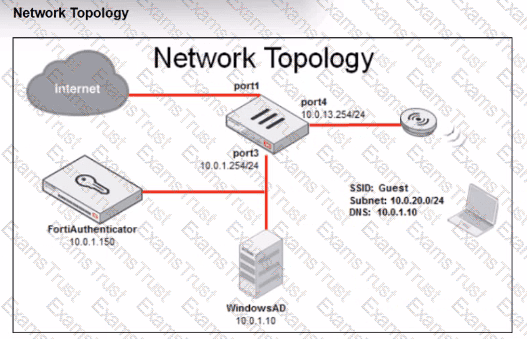

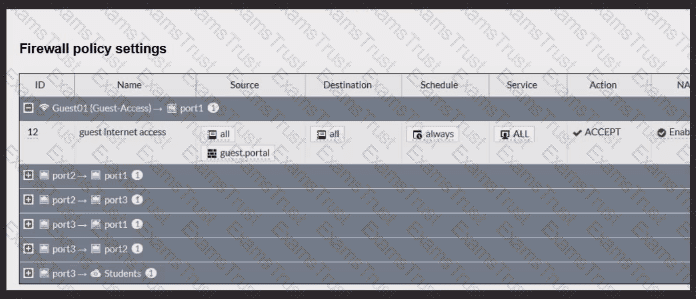
Review the exhibits to analyze the network topology, SSID settings, and firewall policies.
FortiGate is configured to use an external captive portal for authentication to grant access to a wireless network. During testing, it was found that users attempting to connect to the SSID cannot access the captive portal login page.
What configuration change should be made to resolve this issue to allow users to access the captive portal?
Refer to the exhibits.
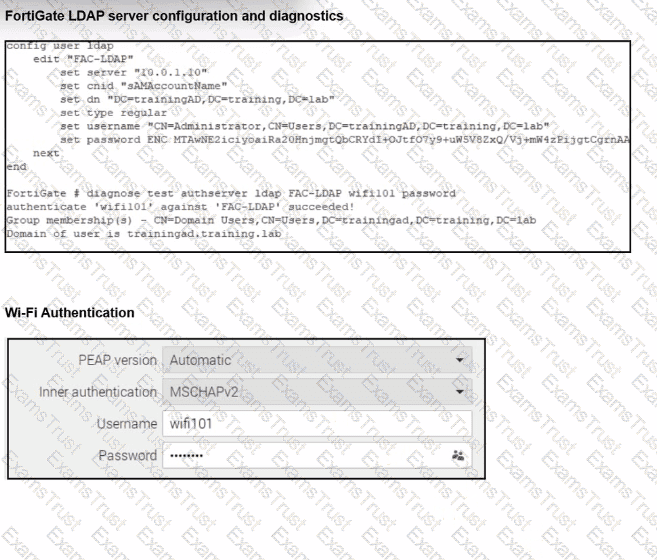
An LDAP server has been successfully configured on FortiGate. which forwards LDAP authentication requests to a Windows Active Directory (AD) server. Wireless users report that they are unable to authenticate. Upon troubleshooting, you find that authentication fails when using MSCHAPv2.
What is the most likely reason for this issue?
Refer to the exhibit.


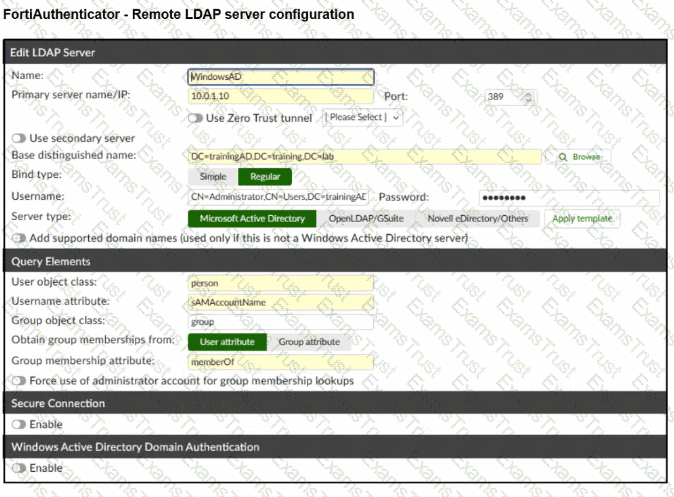
A RADIUS server has been successfully configured on FortiGate, which sends RADIUS authentication requests to FortiAuthenticator. FortiAuthenticator, in turn, relays the authentication using LDAP to a Windows Active Directory server.
It was reported that wireless users are unable to authenticate successfully.
The FortiGate configuration confirms that it can connect to the RADIUS server without issues.
While testing authentication on FortiGate using the command diagnose test authserver radius, it was observed that authentication succeeds with PAP but fails with MSCHAPv2.
Additionally, the Remote LDAP Server configuration on FortiAuthenticator was reviewed.
Which configuration change might resolve this issue?
In a Windows environment using AD machine authentication, how does FortiAuthenticator ensure that a previously authenticated device is maintaining its network access once the device resumes operating after sleep or hibernation?
Refer to the exhibit.
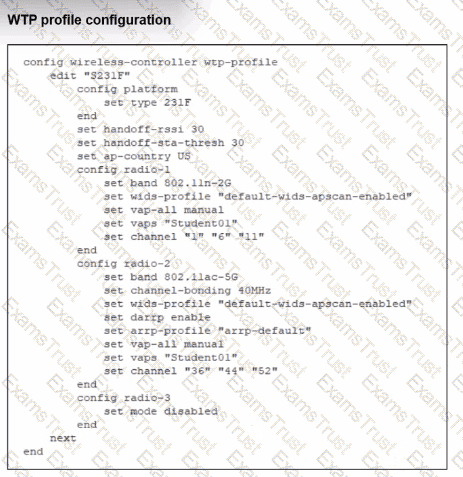
Which shows the WTP profile configuration.
The AP profile is assigned to two FAP-231F APs that are installed in an open plan area.
The first AP has 32 clients associated with the 5 GHz radios and 22 clients associated with the 2.4 GHz radio. The second AP has 12 clients associated with the 5 GHz radios and 20 clients associated with the 2.4 GHz radio.
A dual-band-capable client enters the area near the first AP and the first AP measures the new client at - 3 3 dBm signal strength. The second AP measures the new client at -43 dBm signal strength.
If the new client attempts to conned to the student 01 wireless network, which AP radio will the client be associated with?
You are troubleshooting a Syslog-based single sign-on (SSO) issue on FortiAuthenticator, where user authentication is not being correctly mapped from the syslog messages. You need a tool to diagnose the issue and understand the logs to resolve it quickly.
Which tool in FortiAuthenticator can you use to troubleshoot and diagnose a Syslog SSO issue?
A network administrator connects a new FortiGate to the network, allowing it to automatically discover andI register with FortiManager.
What occurs after FortiGate retrieves the FortiManager address?
Refer to the exhibits.
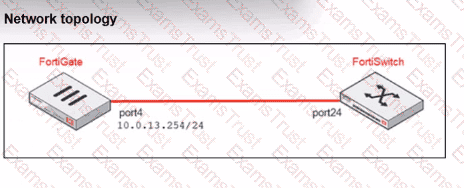
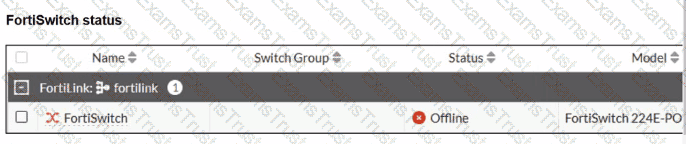
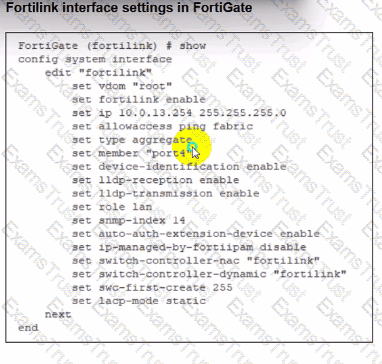
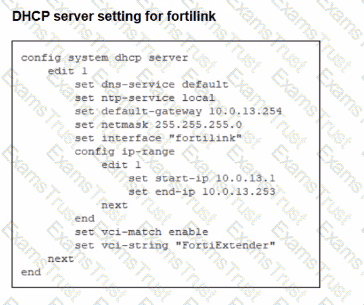
You are adding a new FortiSwitch to FortiGate for management. All necessary settings have been configured on FortiGate, but FortiSwitch remains offline. The cabling has been verified and is correctly connected.
Which misconfiguration might be preventing FortiGate from detecting FortiSwitch?
Which FortiGuard licenses are required for FortiLink device detection to enable device identification and vulnerability detection?
Refer to the exhibits.
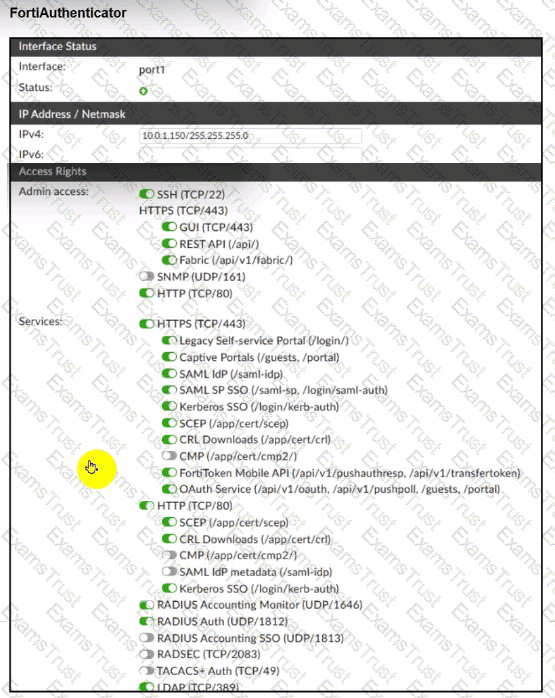
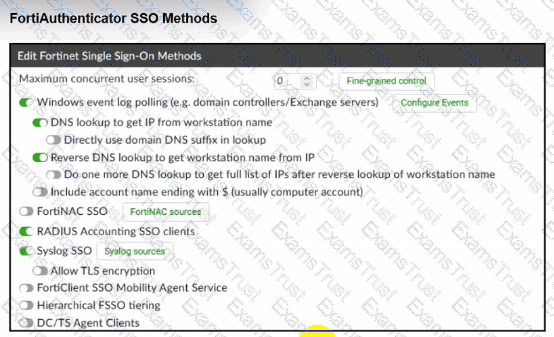
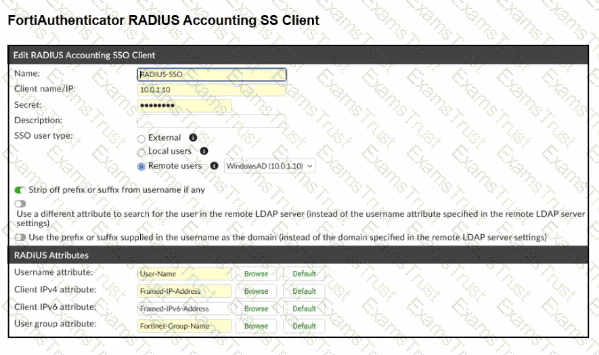
A company has multiple FortiGate devices deployed and wants to centralize user authentication and authorization. The administrator decides to use FortiAuthenticator to convert RSSO messages to FSSO, allowing all FortiGate devices to receive user authentication updates.
After configuring FortiAuthenticator to receive RADIUS accounting messages, users can authenticate, but FortiGate does not enforce the correct policies based on user groups. Upon investigation, the administrator discovers that FortiAuthenticator is receiving RADIUS accounting messages from the RADIUS server and successfully queries LDAP for user group information. But, FSSO updates are not being sent to FortiGate devices and FortiGate firewall policies based on FSSO user groups are not being applied.
What is the most likely reason FortiGate is not receiving FSSO updates?
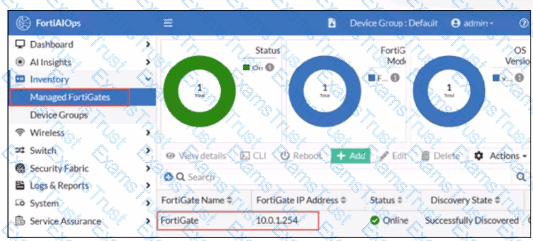
FortiGate has been added to FortiAIOps for management.
Which step must be performed on FortiAIOps to add a FortiSwitch device connected to the recently added FortiGate?
Refer to the exhibits.

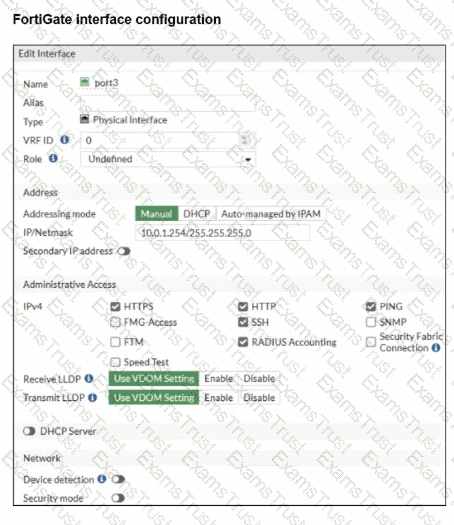
Examine the FortiGate RSSO configuration shown in the exhibit.
FortiGate is set up to use RSSO for user authentication. It is currently receiving RADIUS accounting messages through port3. The incoming RADIUS accounting messages contain the username in the User-Name attribute and group membership in the Class attribute. You must ensure that the users are authenticated through these RADIUS accounting messages and accurately mapped to their respective RSSO user groups.
Which three critical configurations must you implement on the FortiGate device? (Choose three.)